

Gold Prices Extend Losses To Second Day
Tuesday, June 12, 2018, 5:23 PM
Gold prices fall by Rs300 to Rs31,600 per 10 grams on weak global cues
Saturday, June 2, 2018, 7:10 PM
Gold Prices Fall Today, Silver Rates Plunge
Friday, June 1, 2018, 3:42 PM
Learn to Save, Spend, Invest & Borrow Wisely with our Youtube Channel
Commodities may be classified into agri-commodities such as spices, soyabean, corn, cocoa and so on. Bullion and other metals may also be traded. Crude oil, natural gas, furnace oil as well as vegetable oils are also traded on commodity exchanges.
Commodity exchanges in India, are basically electronic trading and settlement systems, with a nationwide presence. A number of brokers are associated with these commodity exchanges who offer online trading in commodities. Electronic trading enables even retail investors to participate in the markets by purchasing small quantities of precious metals and other commodities and holding them in electronic form.
You can buy and sell commodities very fast. All transactions are electronic. There is no need of physical buying and selling of commodities.
Traditionally the prices of commodities move in a direction opposite to equity. Commodities are a good alternate investment.
You can easily buy and sell commodities unlike real estate. There is always a buyer and a seller for the commodity.
Invest only a fraction of the cost of the commodity and take home huge profits, through margin financing.
The forward market commission (FMC) functions as a regulatory authority in the commodity market. The National Commodity and Derivative Exchange (NCDEX), Multi-Commodity Exchange (MCX) and National Multi Commodity Exchange (NMCE) are the commodity exchanges present in India.
In order to open a commodity account you need to submit an address and an identification proof, such as a copy of the voter's card or the passport, a bank account statement, copy of the PAN card which form a part of the know your customer (KYC) norms. This is similar to the opening of a demat account in the equity market.
A trading account will have to be opened with National Spot Exchange Limited (NSEL) and a demat account with a depository such as National securities depository limited.
A minimum amount of INR 5000 is sufficient to trade in most commodities. The brokerage charges are in the range of 0.1-0.3% of the contract value. Transaction charges are in the range of INR 5-10 per Lakh per contract. The brokerage varies based on the type of commodity.
Commodity markets are markets where raw or primary products are exchanged. Indian commodity market consists of both the retail and the wholesale market in the country. Commodity trading is one facility that investors can explore for investing their money. One can trade these commodities by having commodity trading account.
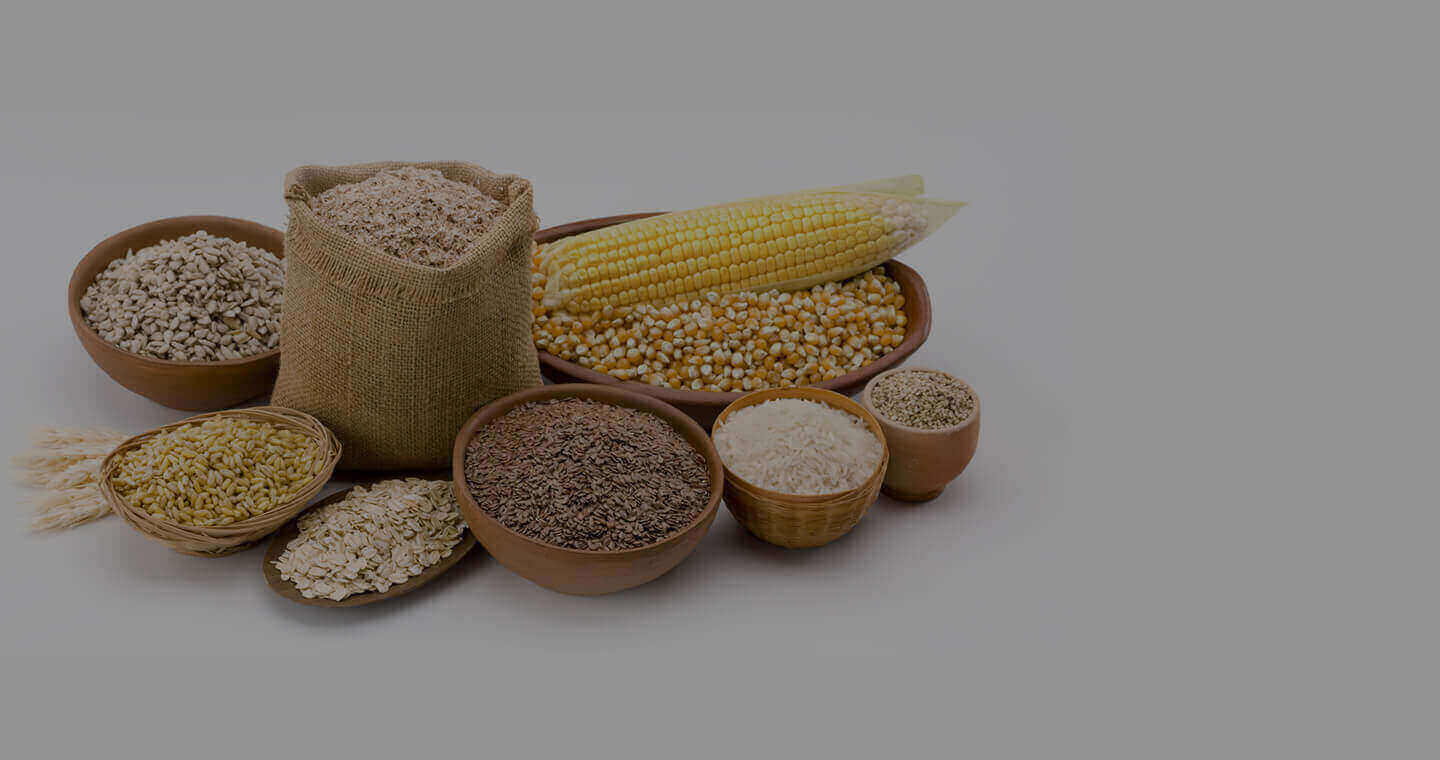
A commodity is a physical good which has a demand for itself and the market treats all sources of supply equally without any differentiation. The price for a commodity is determined purely by global demand and supply. Commodities basically include food grains, crude oil, precious metals, spices ,raw materials for industries such as cotton, iron, rubber and so on.
To be absolutely sure of WHAT TO LOOK OUT, talk to IndianMoney.com on the phone for FREE financial consultation.
Expert Financial Advisors from IndianMoney.com would provide you unbiased, correct and up to date information so that you can make an informed financial decision.
Investments in commodities are made in the form of contracts between the buyer and the seller. This is basically an agreement to buy and sell a commodity at a specific price and time frame. In the trading of commodities no actual transport and storing of commodities takes place as the process is full of hassles. Only an agreement takes place. Under these kinds of future contracts profits or losses occur based on the price movements of commodities within that time frame. Under a commodity future contract there is an agreement between two parties the buyer and the seller to sell the underlying commodity at a certain fixed price at a certain time in the future .This is an obligatory contract. The contracts are executed on a commodity exchange.
In India there are three National level commodity exchanges such as multi commodity exchange of India ltd (MCX), National Commodity and Derivative Exchange (NCDEX) and National Multi Commodity Exchange of India. Trading charts, technical analysis commodity news are all provided in the trading account. High end integrated trading applications provide instantaneous execution, reliability and efficiency in the execution of trades.
The investor registers with a broker after going through the "Know Your Client" procedure similar to equity (stock) trading. Brokers have membership with the MCX or the NCDEX. The basic requirement includes a bank account and commodities demat account from the National Securities Depository Limited to trade on NCDEX. Investments are made with amounts as low as INR 5,000.The margin amounts are payable upfront through a broker. These margins range from 5-10% of the contract and hence INR 5,000 is sufficient for trades in most commodities.
The choice has to be made between cash and delivery. If a cash settlement is done no delivery of the commodity takes place .If the transaction is delivery based then warehouse receipts are required. Brokerage charges generally range from 0.1- 0.3 per cent of the contract value. Transaction charges are INR 5-10 per lakh / per contract. The brokerage costs cannot exceed the maximum limits set by the commodity exchanges.
Any individual, Hindu undivided family (HUF), proprietary firm, partnership firm, or a company can open an account.
PAN Card
Operating bank account and commodity trading account
Demat account is not mandatory for trading, however commodity Demat account is mandatory for all delivery based transactions
Sales Tax number is not mandatory for trading. However, it is mandatory for all delivery based transactions
While trading in commodities, with any registered broker, client has to pay certain charges (apart from margin requirements for trading) which are as follows:
Brokerage
Service tax
Education Cess
Exchange Transaction Charges To learn more about these charges, call us on 080 67974000 and ask for our experts!
It is the quantity of a commodity specified in the contract as tradable units. The lot size is different for each commodity. The details about lot sizes / delivery lot can be obtained from the respective exchanges' website. Each contract has a lot size and a delivery size, which are not the same; in the case of gold, the lot size on the NCDEX is 100 gm while the delivery size is 1000 gm. If a person wants to enter into a delivery settlement for gold, he will have to enter into a minimum of 10 contracts or multiples thereof. Market participants are required to negotiate only the quantity and price of the contract, as all other parameters are predetermined by the exchange. To know more about Commodity Markets, call us on 080 67974000
01 January 1970, Thursday
How to Trade Forex for Beginners? You must have heard or have seen advertisements about traders making millions of dollars through Forex t.
01 January 1970, Thursday
The Indian economy is witnessing a mini revolution in commodity derivatives and risk management. Commodity.
Tuesday, June 12, 2018, 5:23 PM
Saturday, June 2, 2018, 7:10 PM
Friday, June 1, 2018, 3:42 PM
Learn to Save, Spend, Invest & Borrow Wisely with our Youtube Channel
What is Intraday Trading in Telugu - Day Trading in Telugu |Kowshik Maridi | IndianMoney Telugu
7 Years Ago
Nirmala Sitaram as Finance Minister? | ಹಣಕಾಸು ಸಚಿವೆಯಾಗಿ ನಿರ್ಮಲಾ ಸೀತಾರಾಮನ್ ರ ಆಯ್ಕೆ ಎಷ್ಟು ಸರಿ?
7 Years Ago
Thursday, May 11, 2017, 6:44 AM
Thursday, May 11, 2017, 6:37 AM
Sunday, April 30, 2017, 7:56 AM
This is to inform that Suvision Holdings Pvt Ltd ("IndianMoney.com") do not charge any fees/security deposit/advances towards outsourcing any of its activities. All stake holders are cautioned against any such fraud.